
 admin
adminFor many of us, the idea of talking about mental health and stress still carries stigma and silence. But in a time marked by economic uncertainty, climate displacement, digital overwhelm, and persistent insecurity, our mental health is quietly, but deeply, impacted, especially for young people navigating these multiple layers every day.
Why Mental Health Matters in Somalia Today
Mental health isn’t just a personal issue. It’s a societal one.
In Somalia, years of conflict, displacement, and trauma have left lasting impacts on individuals and communities. According to WHO (2022), mental health is a state of well-being that enables people to cope with the stresses of life, realize their abilities, learn well, work well, and contribute to their communities. Unfortunately, many in Somali society imagine mental illness as something only visible on the streets – someone shouting, neglected, or isolated. The truth is, mental health challenges are often invisible. A student, colleague, or family member can be struggling silently.
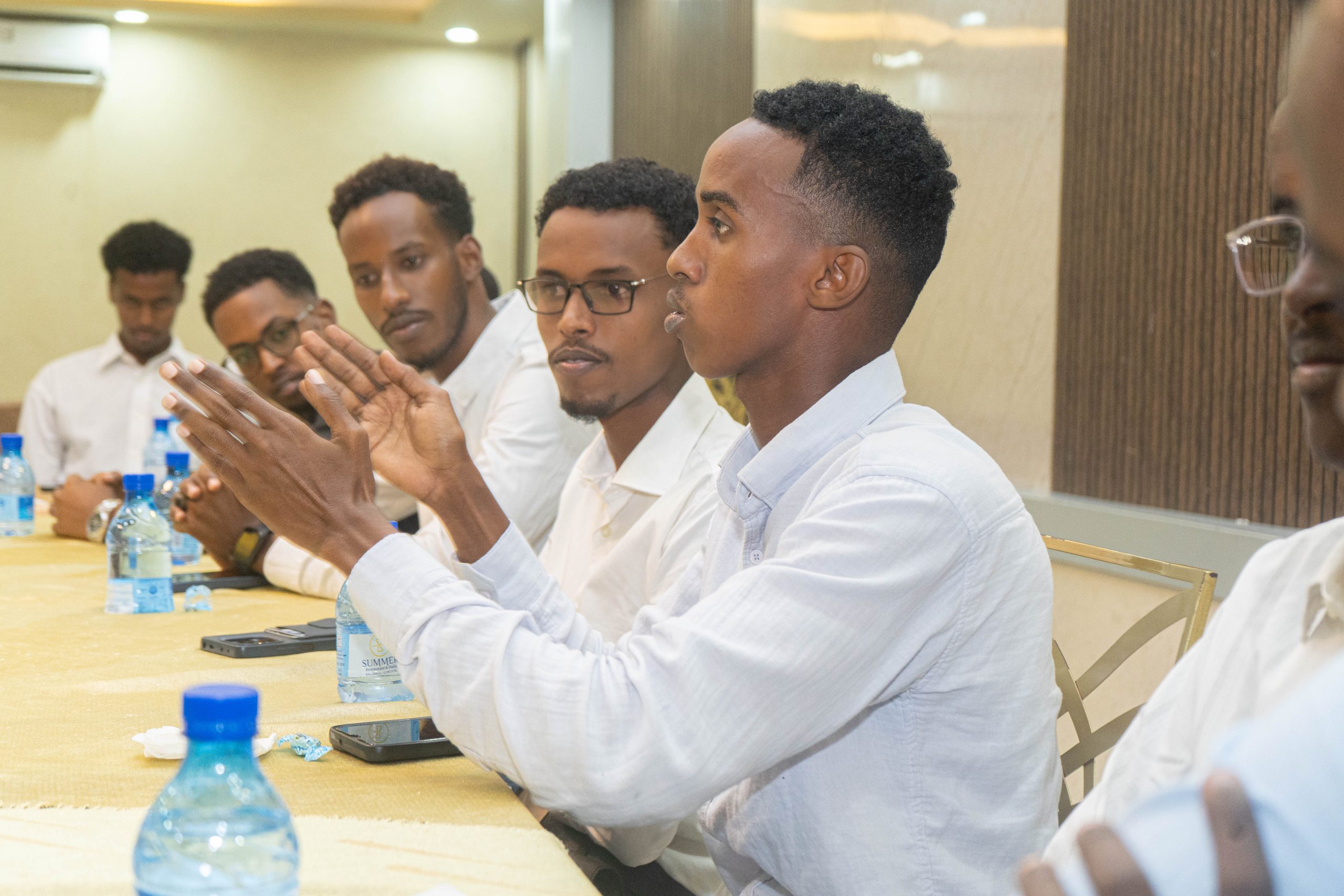
Using harmful labels or public shaming makes it harder for people to seek help. One participant shared a morning incident at their university where a teacher’s hurtful comment left a student feeling upset and discouraged. As the facilitator highlighted, words can leave deeper wounds than physical injury, shaping how people see themselves over time.
At Digital Shelter, our work often focuses on online safety, digital rights, and civic engagement. But all of that sits on one foundation: people. If young people are not mentally and emotionally well, they can’t participate meaningfully, advocate confidently, or imagine a better future. This is why we intentionally created a space for this conversation.
Understanding Ourselves, Supporting Each Other
Our June meetup explored mental health through a wide lens. We began by discussing what mental health means and how stress shows up in everyday life. The facilitator described three types of stress:
- Daily stress (baseline): everyday challenges that keep us alert and engaged.
- Cumulative stress (strain): ongoing pressures that disrupt daily life.
- Critical stress (shock): overwhelming demands and changes leading to breakdown.
Participants reflected on how negative words, cyberbullying, lack of support, social isolation, and online comparisons can damage mental well-being. We also discussed “Cilaaj,” a spiritual approach some communities use for healing, and the importance of understanding mental health beyond cultural assumptions.
Tools for Coping and Building Resilience
From the discussion, several practical ways to improve mental well-being emerged:
- Moving your body, even for 10 minutes a day.
- Building social support and talking to trusted people.
- Practicing self-care and positive thinking.
- Setting small, achievable goals.
- Using social media mindfully.
- Staying connected in authentic ways.
We also explored resilience, often misunderstood as silent suffering. True resilience is the ability to bounce back from challenges, adapt to change, and keep caring for yourself and others. It is built through connection, wellness, healthy thinking, and finding meaning in life.
Mental Health in the Digital Space
As an organization focused on the impact of the internet and technology, we couldn’t ignore the digital side of mental health. Social media can empower, giving young people platforms to speak out, learn, and connect. But it can also lead to burnout, comparison, and anxiety. Many participants shared experiences of feeling overwhelmed by constant news feeds or online negativity. The session reminded us that mental health is not just offline. It’s digital too.
Why This Session Mattered
This meetup was part of our broader project empowering young people, activists, civil society actors, HRDs, journalists, and content creators with skills, privacy tools, and confidence to take up space online and offline. But empowerment means little if someone is emotionally exhausted, insecure, or isolated.
Our participants are holding so much, dreaming so big, and navigating unseen struggles. This session gave us a moment to pause, reflect, and remind each other that it’s okay not to be okay. We learned practical ways to cope, support one another, and create kinder spaces both on and offline.
Key Takeaways
- Prioritize mental health as much as physical health.
- Understand and manage stress before it builds up.
- Use words with care – they can heal or harm.
- Practice self-care, positive thinking, and resilience.
- Build strong, supportive connections, both online and offline.
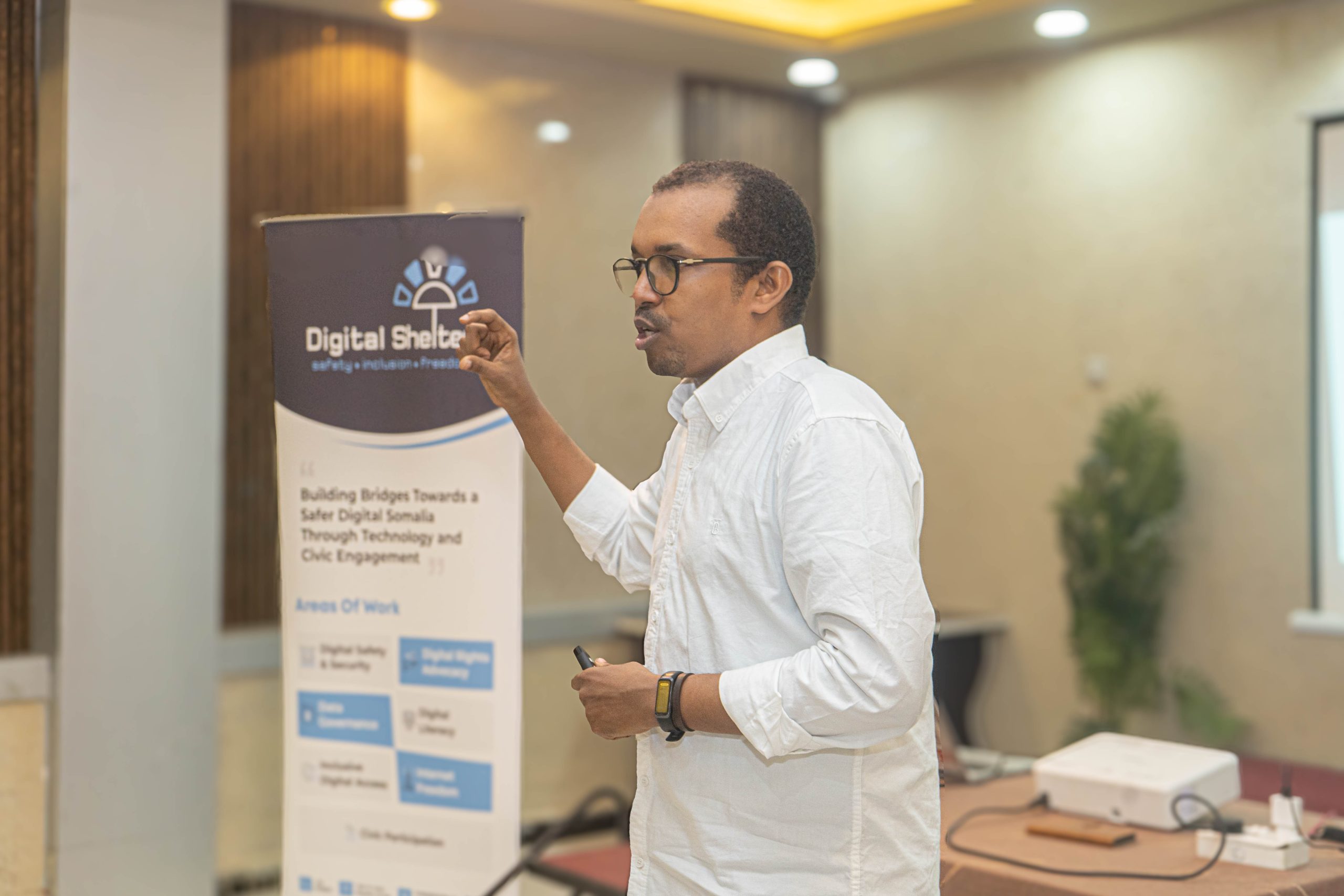
We thank Ahmed Unshur, a Psychologist, Data Scientist, and Consultant, our guest speaker for June, for guiding this conversation with empathy and insight. And to all participants, thank you for showing up with honesty and curiosity. Together, we are building a culture where mental health is respected, protected, and nurtured.
Authored by Digital Shelter Team