 admin
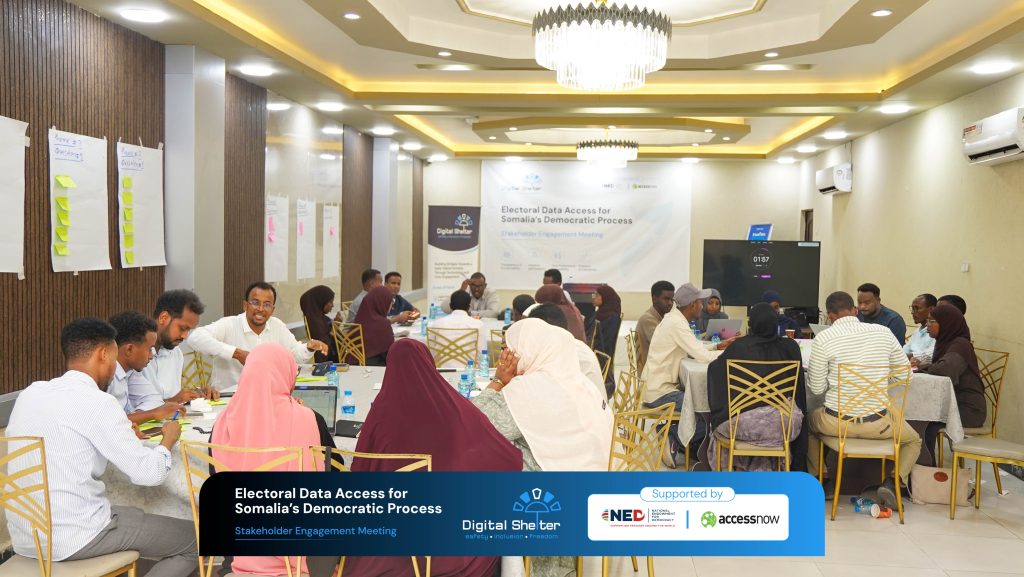
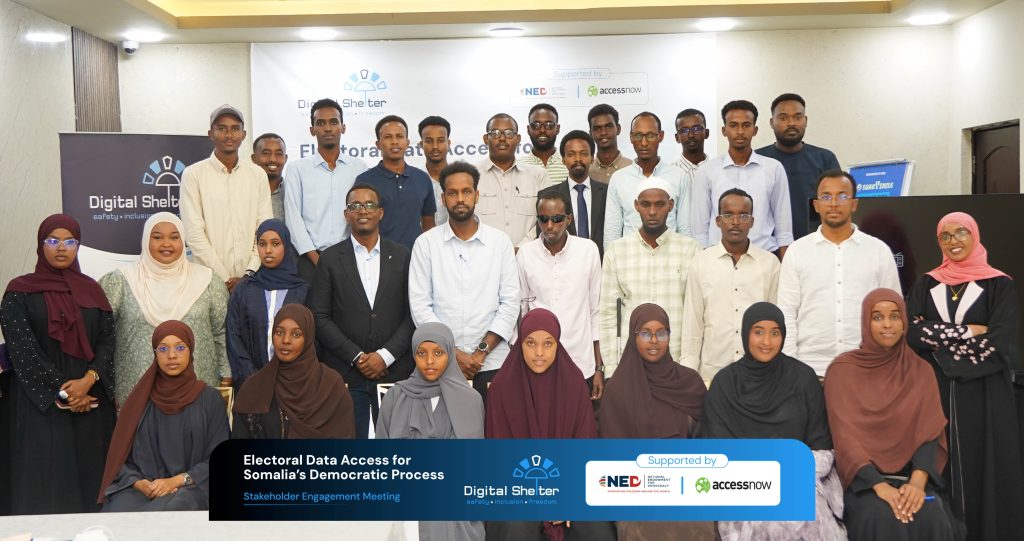
Digital Shelter recently convened the first stakeholder engagement meeting for our electoral data initiative in Mogadishu. The meeting brought together representatives from research organizations, civil society, media, academia, youth groups, political stakeholders, organizations representing persons with disabilities, technology companies, and Digital Shelter alumni.
Because the platform is still in its design phase, we organized the meeting as an open dialogue. Our aim was to learn from the people and institutions who will use the platform before key decisions on its structure, content, and safeguards are made.
Why this matters
Reliable and accessible election information remains one of the biggest challenges in Somalia. Information on elections, governance, political institutions, and public officials is spread across many institutions, inconsistently documented, and difficult to verify. This gap is easily filled by misinformation. It weakens public trust and makes it harder for journalists, researchers, and citizens to engage with evidence.
Our initiative aims to bring verified, publicly available election and governance information together in one accessible place.
How the meeting was organized
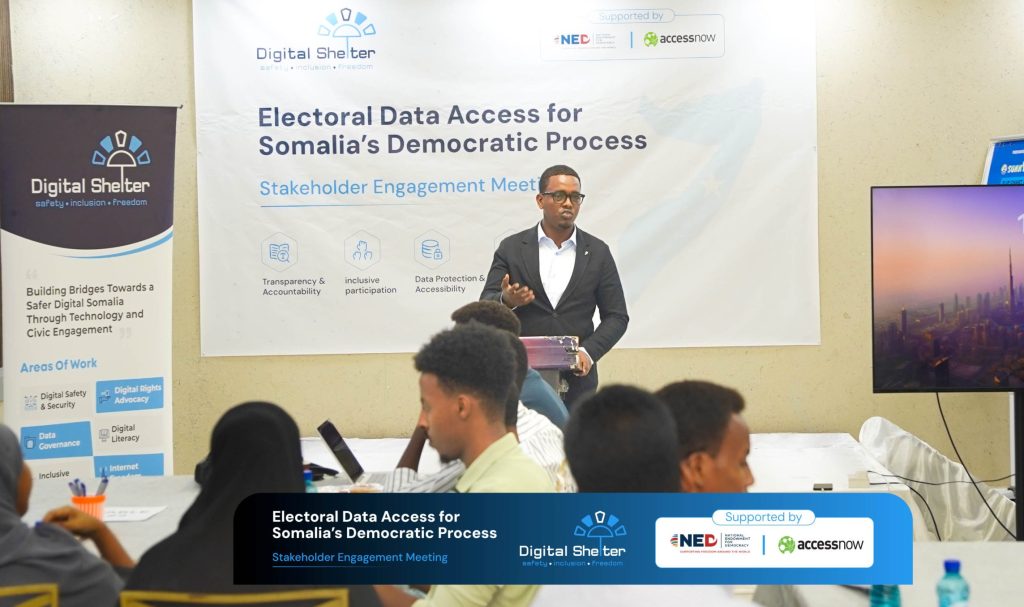
Our Program Manager, Ayaan Khalif, opened the meeting by introducing the initiative and what we hoped to learn from participants. We wanted to understand how stakeholders currently find and verify election information, the challenges they face, and what would make a public information resource credible and useful to them.
Participants then joined three thematic discussion groups:
- Access and the information landscape
- Trust and credibility
- Digital rights and safety
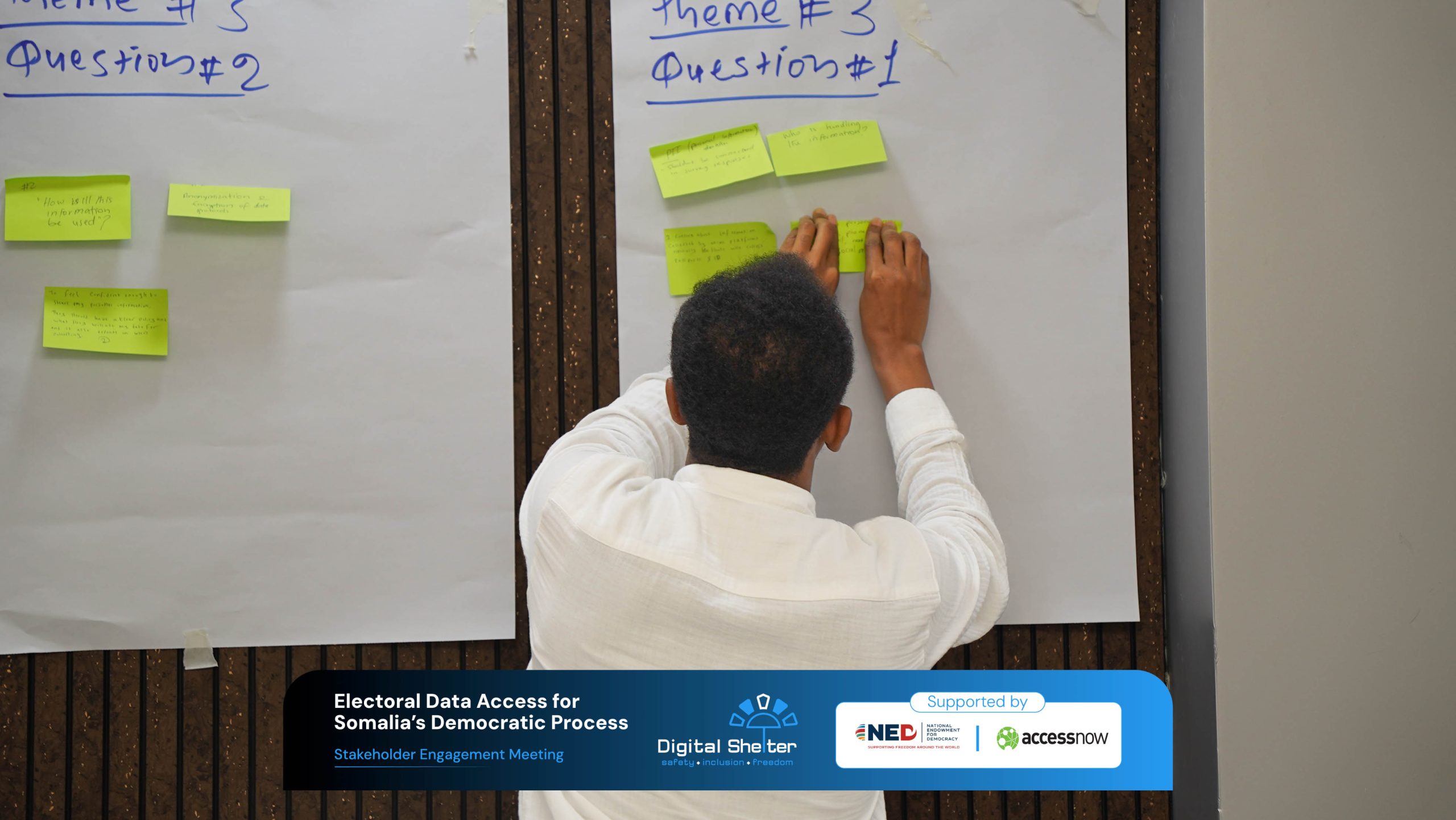
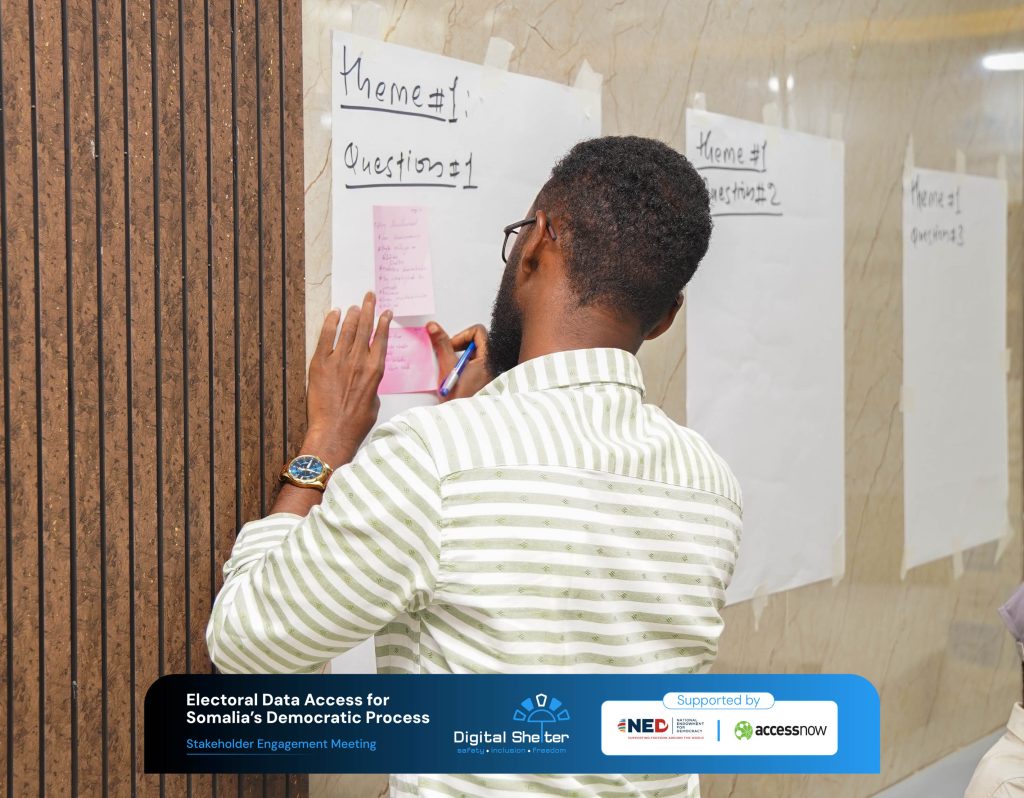
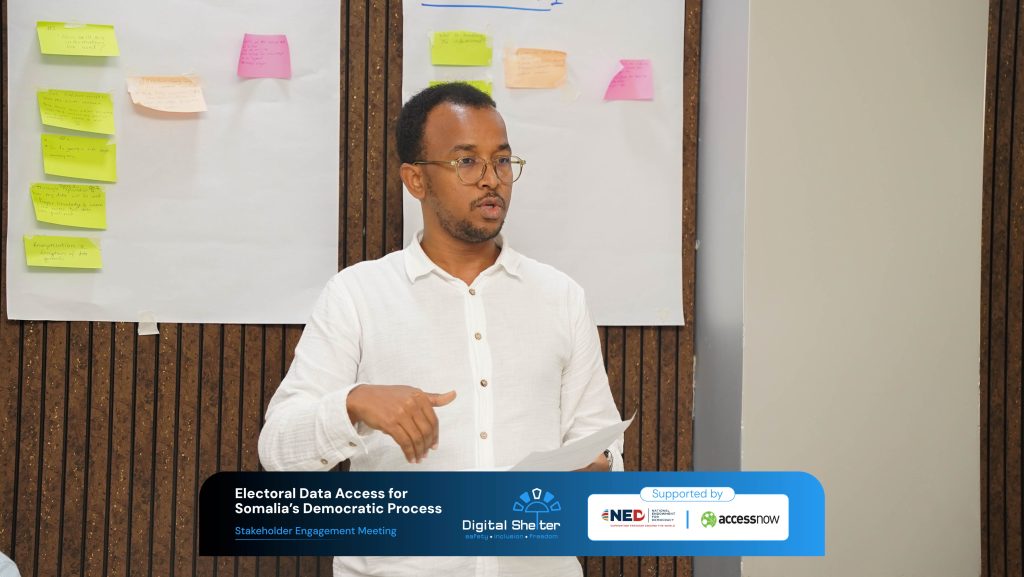
Each group worked through a set of guiding questions, recorded its key points on sticky notes, and presented its findings to the full meeting.
What our speakers shared
Mahad, from Somali Public Agenda, spoke about the gap between the amount of election related information that exists in Somalia and the public’s ability to find and use it. He noted that valuable documents and analyses are often scattered across institutions or poorly archived, and that even public officials sometimes struggle to locate documents produced by their own institutions. He encouraged us to measure the platform’s success by how accessible and understandable its information is, and to plan for sustainability, as earlier election information platforms disappeared once their funding ended.
Mohamed Abdiaziz, a researcher, archivist, and analyst of Somalia’s administrative and political history, spoke about the value of preserving institutional memory. He observed that public conversations about elections are often shaped by limited access to verified information, and that electoral agreements and policy records remain valuable long after they are produced. A well organized public archive, he argued, would serve future researchers, journalists, and citizens as much as it serves today’s needs.
What we heard
Access to information. Participants agreed that the absence of a central source of election information is one of the main barriers to informed participation. Information from government institutions, the electoral commission, media, and civil society is often inconsistent, delayed, or incomplete. Participants also pointed to limited historical archives and limited resources in the Somali language.
Trust and credibility. Participants were clear that trust depends on the process behind the information as much as the information itself. They asked that the platform show where each piece of information comes from, explain how it is verified, publish corrections openly, and remain independent.
Digital rights and data protection. Participants stressed that public trust is closely linked to how information is collected, stored, and shared. They asked us to draw a clear line between public information and personal data, so that nothing published through the platform exposes individuals or puts their privacy at risk. They recommended a privacy by design approach, collecting only the minimum data needed, protecting systems through strong security measures, and publishing a privacy policy that users can easily understand.
Accessibility and language. Across all groups, participants called for content in both Somali and English, and for information that persons with disabilities can actually use. Participants with visual impairments shared that public information is often published as scanned documents, that many websites are difficult to navigate with assistive technologies, and that information shown in graphics rarely comes with a text description. Their contributions were a strong reminder that access to information has to be designed for from the start.
What comes next
The findings from this meeting are informing the platform’s structure, data standards, and safeguards. We will continue to consult with stakeholders as development progresses, so that the platform responds to the needs of the people who will rely on it.
Thank you to everyone who joined and contributed. Your experience, ideas, and active participation made the discussions meaningful, and we look forward to continuing to work together.
Authored by Digital Shelter Team